There is a generation of contractors who built homes the way you build anything meant to last, carefully, with full knowledge of what it costs, and without anyone holding their hand through the financial side of it. They cut their teeth on jobs where the margin for error belonged entirely to them, where a bad estimate did not generate a meeting or a change order, it just meant a harder year. The discipline that came out of that experience is the same discipline the best contractors in the country are still practicing today, dressed up now in software and reporting tools but, underneath all of it, exactly the same thing it always was.
It is worth sitting with what those men were actually managing before talking about where construction accounting stands now.
- What a Self-Employed Carpenter Was Actually Running
- The Estimate Was the Budget, and It Had to Be Right
- Materials Tracking Was Physical and Meticulous
- The Tax Code Was Different, But the Obligations Were the Same
- Building Your Own Home Was a Statement of Mastery
- What That Generation Figured Out Without Any of the Tools We Have Now
- What's Different Today, and What Isn't
What a Self-Employed Carpenter Was Actually Running
Most of them did not think of themselves as businessmen. A carpenter was a carpenter, and the bookkeeping was just the part of the work that happened after dark. But whether he framed it that way or not, a self-employed contractor in the 1970s was carrying a real financial operation on his back every single day, estimating jobs, managing whatever labor he had, tracking costs against a bid that existed on paper or sometimes only in his head, and settling up with the IRS at the end of the year regardless of how the months had gone.
Nearly all of these operations ran as sole proprietorships, meaning the income flowed through the owner personally and the business profit or loss got reported at year end on Schedule C of Form 1040, with self-employment tax owed on top of whatever income tax the year had produced. Millions of trade contractors still file it the same way today. The rates have changed. The structure underneath them has not moved.
The Estimate Was the Budget, and It Had to Be Right
Before pricing databases existed, a contractor putting together a bid on a custom home was working entirely from experience and from walking the land. He knew what a square of roofing was running at the local yard that month and what a skilled framer expected per day because those numbers lived in him the way a familiar road lives in the body, traveled so many times they no longer require thinking. If the job came in over the estimate, he paid his dues for it out of his own pocket, because there was nowhere else for the loss to go.
Getting the number right at the outset was not just good practice, it was the entire game. The contractors who stayed in business through the 1970s and into the 1980s were not necessarily the most talented builders on the job site. They were the ones who could price a project accurately off a set of plans and a single afternoon walking the property, and who understood that every dollar of error was theirs alone to carry home.
Materials Tracking Was Physical and Meticulous
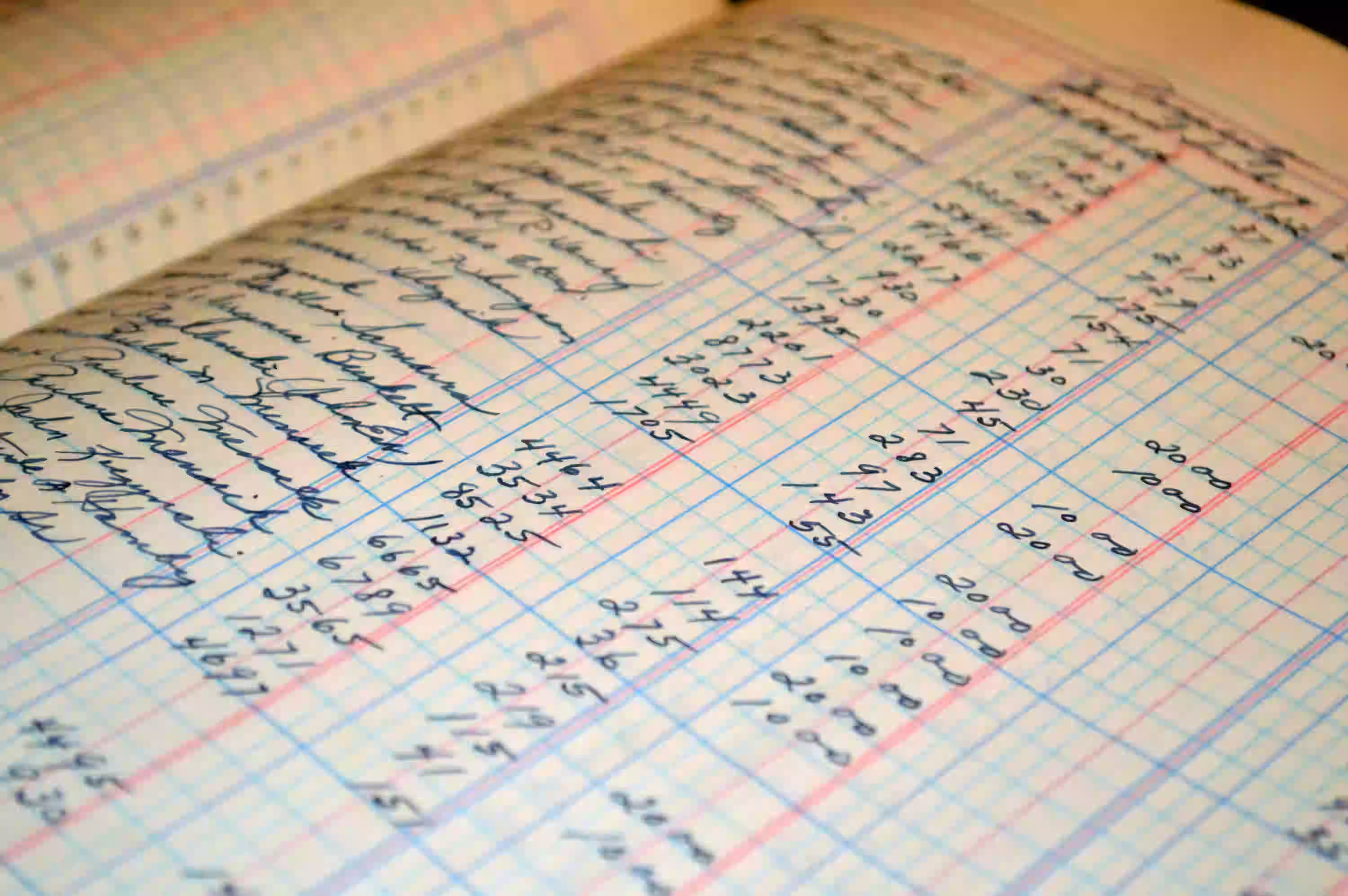
Every receipt from the lumber yard went into a folder with the job name written on it. Costs got tallied by hand at regular intervals throughout the job, often at the kitchen table late in the evening, sometimes done by a wife who had her own full day behind her and did it anyway. Because the alternative, finishing a job with no real accounting of whether it had made money, was not something a serious operation could live with.
What that discipline produced is something a lot of contractors running job costing software today still fall short of, an honest and current picture of what each job had actually spent against what had been budgeted for it. The method was about as low-tech as it gets. The commitment required to maintain it, week after week, job after job, year after year, was anything but.
The Tax Code Was Different, But the Obligations Were the Same
The Tax Reform Act of 1986 moved through the construction industry the way a hard frost moves through a garden, felt by nearly everyone, changing what survived and what did not. Depreciation schedules shifted, income tax brackets collapsed, and the rules around expensing equipment were restructured in ways that took several years to fully absorb. Before the reform passed, a contractor buying a new truck or a piece of heavy equipment had genuine reason to think carefully about the timing of that purchase. Accelerated depreciation in that era made it a meaningful tax planning decision, not just an accounting entry.
After the reform, some of that calculus changed, but the quarterly estimated payments were still due. The self-employment tax was still owed. The net profit still had to be reported accurately at year end, full stop, regardless of how complicated the year had been or how difficult the jobs were to close out. Section 179, the provision that lets businesses expense qualifying equipment in the year of purchase rather than depreciating it slowly over time, existed back then in a form so limited it would be nearly unrecognizable now. A sole proprietor running one crew out of a single truck in 1978 would find the current